
[Some computers might ask you to allow the music to play on this page]
Jazz And Opera by Howard Lawes
|

Trumpeter Mark Kavuma's latest album Arashi No Ato, included a track, Love Will Find A Way, that celebrated the first all African-American Broadway Show premiered in 1921 called Shuffle Along. The show, composed and produced by Noble Sissle and Eubie Blake was a surprising success and set the pattern for further African-American musicals performed during the following few years. Shuffle Along was the exception, however, and the vast majority of successful Broadway shows were written by non-African-American composers including those which featured stories about black people in black communities.
Opera and jazz have been uneasy bedfellows. George Gershwin composed a jazz opera called Blue Monday that premiered with little success on Broadway in 1922, but luckily for Gershwin one who was impressed was bandleader Paul Whiteman who commissioned him to compose the piece which became Rhapsody In Blue. In 1935 Porgy And Bess by George and Ira Gershwin and Dubose Heyward was premiered at the Alvin Theatre in New York, a production that has been described as a supremely American operatic masterpiece and the most ambitious work by one of the nation’s greatest musical talents. However despite such plaudits it took until 1985 before Porgy And Bess was performed at the prestigious Metropolitan Opera House in New York.
Here is an excerpt from a performance of Blue Monday.
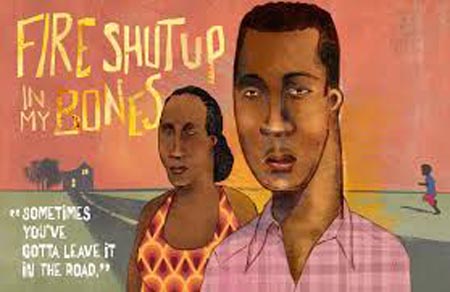
It has taken until this year, 2021, one hundred and thirty eight years after the Metropolitan Opera was founded, for an opera composed by an African-American to be performed in this great opera house. The opera is called Fire Shut Up In My Bones and the composer is jazz trumpeter Terence Blanchard.
A brief promotional video for Fire Shut Up In My Bones.
Ironically, given the success of Porgy And Bess, 1935 was a low point in the fortunes of African-American musical theatre and in an effort to provide opportunity for those who wished to make their way in musical theatre during the Great Depression the United States government facilitated the Negro Theatre Project with Units in 23 cities. The Units operated from 1935-1939 providing much needed employment but despite the participants' African-American heritage only one production, originating in Chicago in 1938, and called The Swing Mikado based on the Gilbert and Sullivan operetta, incorporated any jazz.
In more recent times there have been renewed attempts to blend jazz and opera. King Kong was a South African production billed at the time as an "all-African jazz opera"; it told the story of boxer Ezekiel Dhlamini and was an immediate success. King Kong featured music by Todd Matshikiza and lyrics by Pat Williams. The production was first staged at Johannesburg's Witwatersrand University Great Hall. It opened on February 2nd 1959 and went on to take South Africa by storm. Nelson Mandela attended the opening night and is on record as highlighting the show as his favourite musical. The original South African production starring Nathan Mdledle, Ruth Nkonyane, Dan Poho and Miriam Makeba, helped launch Makeba's international career. Also noteworthy is the co-operation that occurred between black and white personnel to make the production possible during the apartheid era. The production premiered in London in 1961, and in 2017, saxophonist Soweto Kinch presented a programme entitled King Kong - The Township Jazz Musical, on BBC Radio 3 with Hugh Masekela, Pat Williams and singer Abigail Kubeka among the featured guests.
Here is a short documentary about the jazz opera King Kong.

Blood On The Fields, first recorded in 1995, is a two-and-a-half-hour jazz oratorio by Wynton Marsalis commissioned by the Lincoln Center. It relates the stories of African-American slaves, their struggles for freedom and the resulting inspiration for all. A 2013 performance had Gregory Porter, Kenny Washington and Paula West on vocals while the music was played by the Jazz at Lincoln Center Orchestra. "In 1997 Wynton Marsalis became the first jazz musician ever to win the Pulitzer Prize for Music for Blood On The Fields. During the five preceding decades the Pulitzer Prize jury refused to recognize jazz musicians and their improvisational music, reserving this distinction for classical composers. In the years following Marsalis’ award, the Pulitzer Prize for Music has been awarded posthumously to Duke Ellington, George Gershwin, Thelonious Monk and John Coltrane".
A video of Wynton Marsalis with Kenny Washington singing The Sun Is Gonna Shine from Blood On The Fields:
In 2007, the jazz opera Bridgetower composed by Julian Joseph and commissioned by the City of London Festival was performed by the London Symphony Orchestra at St Lukes. It told the story of the British violinist George Bridgewater who was born in 1778 of a Polish mother and West Indian father, the title role was played by Cleveland Watkiss MBE. Kevin LeGendre in a Jazzwise review praised the production describing Buddug Verona James and Jacqui Dankworth as 'outstanding', judging Cleveland Watkiss's performance as 'a career high', highlighting the skills of saxophonist Steve Williamson and violinist Christian Garrick and describing Julian Joseph as the star of the show.

George Bridgewater's musical prowess brought him success and acceptance within society during the early 19th century and yet at the same time slavery was still legal in Britain and its colonies. Julian Joseph's second jazz opera in 2010 also had Cleveland Watkiss MBE in the lead and was called Shadowball. It is the story of baseball during the 1930's and 1940's when the game provided the same sort of opportunities for talented African-Americans as jazz to earn a reasonable income. This production was sponsored by the Hackney Development Trust, an educational organisation, and parallels the work of the Negro Theatre Project of the 1930's in the USA.
Julian Joseph and others from the production talking about Shadowball.
Julian Joseph's next project was a re-working of the classic love story Tristan And Isolde. Windows Into Tristan And Isolde was commissioned by the Royal Opera House and was premiered at the Royal Opera House's Linbury Studio in September 2013 featuring Carleen Anderson, Christine Tobin, Cleveland Watkiss and Ken Papenfus, plus members of the Julian Joseph All-Star Big Band. The completed opera was not premiered until 2018, this time commissioned by the BBC and performed at the Queen Elizabeth Hall in London.
Terence Blanchard has had an outstanding career as musican, band-leader and composer. He has released 22 jazz albums, won 6 Grammy Awards and is a prolific composer of film scores, two of which have been nominated for Academy Awards and he has also composed 2 operas. His first, called Champion premiered in St Louis in 2013 and tells the story of the African-American boxer Emile Griffith. The piece was commissioned by the Opera Theater of St Louis and Jazz St Louis and leading roles were taken by opera  singers Arthur Woodley and Denyce Graves.
The second opera is called Fire Shut Up In My Bones which in 2019 was also premiered in St Louis, but has now gone on to make history by being the first opera composed by an African-American to be performed at the most prestigious of all opera houses in the USA. Quoting from the Metropolitan Opera press release "Yannick Nézet-Séguin conducts Grammy Award–winning jazz musician and composer Terence Blanchard’s adaptation of Charles M. Blow’s moving memoir, which The New York Times praised after its 2019 world premiere at Opera Theatre of Saint Louis as “bold and affecting” and “subtly powerful.” "Featuring a libretto by filmmaker Kasi Lemmons, the opera tells a poignant and profound story about a young man’s journey to overcome a life of trauma and hardship. James Robinson and Camille A. Brown - two of the creators of the Met’s sensational recent production of Porgy And Bess - co-direct this new staging; Brown, who is also the production’s choreographer, becomes the first Black director to create a mainstage Met production. Baritone Will Liverman, one of opera’s most exciting young artists, stars as Charles, alongside soprano Angel Blue as Destiny/Loneliness/Greta, soprano Latonia Moore as Billie, and Walter Russell III as Char’es-Baby". This may be the first time a jazz quartet and the orchestra share the Met’s pit. Even so, there is no real swinging. Blanchard noted that he didn’t want it to sound like Count Basie’s band but he has effortlessly blended the mix of jazz, blues and gospel in the larger classical pond".
'One moment can change everything. When Charles discovers that his cousin has returned to his Louisiana hometown, he races home from college to confront his past. Memories and shadows surround Charles as he strives to move beyond a cycle of violence and forge a brave new path.'
Here's a video of some of the kids in the show talking about their roles:
......... and here's a video of Will Liverman singing an excerpt from Charles’s Act II aria in the Opening Night performance, with Walter Russell III as Char’es-Baby.
Jon Batiste is another African-American jazz musician who has found success in the wider world having recently won the 2021 Academy Award for scoring Pixar's first Black-led feature Soul. As Ammar Kalia wrote in the Guardian "Batiste’s success has inarguably been pivotal in introducing a wider audience to jazz, not least through inviting the likes of saxophonist Wayne Shorter and Philadelphia group the Heath Brothers to perform in front of an audience of millions on The Late Show. “I see jazz as a superpower,” he says. “It has never depended on popularity to maintain relevance because its value is undeniable; it represents all the nuances of the human soul. It is an honour to play this music because it is my heritage – it is the Blackest, deepest American classical music that has grown to become a universal art form. Jazz shows you that something can be from a specific experience and it can be adapted in a way that’s not appropriated.”
The success of these African-American jazz musicians and composers in finally gaining the recognition and rewards they deserve must surely warm the hearts of all who love jazz. The upcoming EFG London Jazz Festival will be a wonderful opportunity to re-establish our connection with some of these great musicians.
In one newspaper, Terence Blanchard is quoted as saying the of first night: “Some of my hardest friends came up to me: ‘Man, you made me cry four times.’ But I think those tears were tears about what it meant, what’s going on in the country, how this can change things. It speaks to the yearning that we’ve been having for generations just to be equal, man, just to have an opportunity to do what everybody else does and to be seen.”
Click here for a review of Fire Shut Up In My Bones with more comments from Terence Blanchard.
Other pages you might find of interest :
© Sandy Brown Jazz 2021
Click HERE to join our mailing list