 AUDIENCE
 During the latter part of 2008, Sandy Brown Jazz is looking at some of the factors that influence the economics of jazz.
Part 1 considered the situation from the musicians’ point of view (click here to read the article).
This second article discusses the position from the perspective of audiences at live jazz events. You may disagree with what follows or your own experience may be different. We would welcome the views of as many people as possible so that we can get an overview of how things really are in the UK and abroad, so please contact us with your experience by clicking here.
AUDIENCE There is, of course, no such thing as a specific ‘jazz audience’, except that the words describe people who listen to jazz music. Jazz itself comes in different forms. Some people prefer a particular jazz style; other people have a more varied taste. But whatever the preference, audiences break down into other different groups.
In their 2004 – 2006 study for Jazz Services, The Value Of Jazz In Britain, Mykaell Riley and Dave Laing related audiences to different types of venue; we shall discuss the issue from a slightly different angle, considering:

Each of these audiences will expect to pay different prices for the type of gig they attend, and in turn, the different prices will have an influence on the type of audiences the gig will attract.
Riley and Laing found that the average audience size in 2003-2004 was 70 and in 2004-2005 was 78. The average price for admission to tour gigs was £5.
In 2004-2005, most theatres charged more than £7.50 as did 43% of restaurants and cafes. 35% of pubs and 25% of restaurants did not charge for admission. 38% of clubs charged between £5 and £7.50, whilst a slightly smaller number charged between £7.50 and £10.00.
We suspect that the admission price of tour gigs has gone up, but possibly not in proportion to the current cost of living for musicians.
Riley and Laing found that the largest average audiences were found in theatres and concert halls. Over half of theatres where jazz was promoted attracted audiences of more than 100 but also tended to charge the highest average ticket prices.
The prices people pay to attend a concert in 2008 will depend on the band, the venue and the number of people that are expected to turn up. Taking the Herbie Hancock Sextet UK tour in November 2008 for example, the following ticket prices apply:
The Sage, Gateshead: £5 - £29.50
The Royal Festival Hall, London: £10 - £40
The Bridgewater Hall, Manchester: £25 - £35
The Barbican, London: £10 - £40
The Symphony Hall, Birmingham - lower priced seats sold remaining seats at beginning of October £27.50 - £32.50
The seat price itself is not the only cost of attending for many people. There is often a transport cost and parking cost for which a further £5 - £10 can be added, and taking into account travel and starting times, many people will eat out before the concert adding perhaps a further £10 + per person.
Attending a jazz concert could therefore cost a couple between £50 - £100, perhaps more depending on where the concert is staged. A London concert for people living a good distance outside the city could cost more and you might also have to pay accommodation costs.
To attend concerts at these prices, justified as they may be, will restrict attendance to those groups of people who can afford them, and restrict the number of times during the year that some people can afford to go.
There is also a consequential expectation from the audience that they go to listen to the jazz without other distractions. The concerts people choose to go to also raises some interesting points as the following conversation with a concert-goer illustrates:
‘We (my partner and I) go to a jazz concert about four times a year. On average we will probably pay about £12 - £15 a seat although I would pay up to £30 if it was a band I really wanted to hear. Generally speaking we would travel about twenty miles to (town A – about 20 miles away) for the gig, although again if there was a band I particularly want to hear I would as far as (town B – about 40 miles away). I usually choose which gigs we go to from descriptions in programmes sent to us by a number of venues:- I may have heard of the band; I may go by the description of the band – for example, perhaps they say so and so plays like Chet Baker who I like – or I may choose something where the description of the gig sounds interesting and I see it as a challenge.’
‘If we go to a gig at a pub, we would probably expect to pay less, perhaps £8 - £10 if it was good jazz and a good venue. We don’t enjoy jazz as background music where other people there are talking all through the gig – if you pay, you go to listen.’
Many people who go to jazz concerts also buy the band’s CD at the event, queuing in the interval or usually after the gig to get a signed copy. The current expected price to pay for a CD is around £10, and the person from the above conversation bought two CDs at the last gig they went to. This is a helpful source of income for the band and often a good price for the customer (especially if the CD is signed and dedicated), but should also be added to the cost of the event for the person attending.

There are many local jazz clubs across the UK often, but not always, focussed on ‘Trad Jazz’. The audience is usually made up of the same club members and club evenings are often held monthly. Some clubs meet to play jazz on record; others have visiting ‘local’ bands. Historically, separate rooms in pubs are common venues.
Members may pay a club annual membership fee, but do not pay large sums for club evenings. One club we spoke to charged £5 for the evening. This did not raise enough to pay the band and so a raffle was also held during the evening to bring in more money. It appears that admission prices for clubs has not changed much since Riley and Laing’s 2004-2005 figures (£5.00 - £7.50).
Bands that play the clubs do not expect to be paid large fees but find the atmosphere conducive to playing and the audience appreciative of the music they play. This can count for a lot in terms of non-financial satisfaction.
A number of such clubs have concerns about:
(a) the number of members who come along - one club has about 50 members of whom 30 usually turn up, and
(b) the age of members – one Trad Jazz club we spoke with has no member under 60 years of age; would like to attract more members and would like younger members to come along.
The continuing financial viability of a club that has live music clearly depends on the number of members and the number of members who turn up regularly. Nevertheless, for those who do attend regularly, they may well listen to more live jazz during the course of the year than the ‘concert-goers’.
Within this group we should include those who diligently support a particular musician. These people may listen to a variety of music if the musician they support plays with different bands or groups. They will attend a variety of venues at different prices but may have additional costs in terms of travel and accommodation.
These people may also be relied upon to augment the number of people who come to the gig for other reasons. Band followers can offer substantial support to a band.
In the September edition of Word magazine Tom Whitwell writes of an essay by Kevin Kelly called 1,000 True Fans. In the essay, Kelly apparently argues that it is no longer enough to have a large number of people like your music and buy the album - they'll just download it for free. Instead, says Kelly, you need a deeper relationship with fewer people. Whitwell then describes how a certain Seth Goding sees a future where the record labels look after the fans, offering them special products. Whitwell describes how he has bought CDs by a particular artist and would happily pay to see them in concert, but no-one has followed up his purchase with information about gigs. Perhaps there is a lesson here for musicians not just to sell their CDs at gigs but also to invite audiences to join their mailing lists?
There was one occasion however at a Youth Jazz Orchestra gig where we were sitting near to one supporter and follower who, throughout the gig, gave a running commentary to the person he was with about the members of the band and the arrangements they were playing to the point where other members of the audience would have happily throttled him.
Some pubs regularly feature a jazz evening or evenings. Some well known venues such as Bristol’s Old Duke or the Bull’s Head in Barnes have had a different jazz band playing six nights a week. Other pubs present a mixture of musical styles - rock, blues, rhythm and blues, etc. with jazz featured on a particular night once a week or once a month. Sometimes the band plays in the pub (the Old Duke), sometimes in a separate room (the Bull’s Head).
Riley and Laing found that the most frequently used venues were pubs (26%), but that two-thirds of pubs had jazz audiences averaging less than 100.
The pub venue can develop its own regular, local audience who ‘go down to the pub’ on that evening to meet with people they know and to listen to whichever band is on. In some ways, the audience has things in common with the Club audience, but is less formal. People who go may also get to know the bands who appear regularly and there will be elements of the Band Supporter category, but the audience may be less likely to follow the band to other venues.
There was a time when these audiences would ‘go down to the Old Vic on a Thursday night’ and not expect to pay for anything except their drinks. There was an assumption that additional people would be attracted by the music and that the extra money taken over the bar allowed the landlord to pay for the band. It was more likely that the bands would not be paid very much and increasingly that the additional bar takings would not cover the cost of the musicians. Some pubs go on promoting jazz evenings because they believe in the music but sometimes this is at a loss or merely to break-even.
Some bands reached the point where they would have a helper taking a collecting tin around the pub, but this was an unreliable and not particularly successful way of supplementing the band’s income.
In more recent years, some pubs have introduced an entrance charge similar to the charges made by Jazz Clubs (around £5-£6). Audiences appear happy to pay the entrance fee although there is still the misconception amongst some people that the cost of the band comes out of the pub’s takings over the bar.
The number of jazz festivals in the UK and abroad appear to be increasingly popular - Riley and Laing suggested that by 2006 there were more than 200 jazz festivals in the UK - and jazz magazines such as Jazz Journal International regularly dedicate pages to reviews of festivals, suggesting that a good proportion of their readership have an interest in the events.
Riley and Laing found that over half the festival promoters in their survey put on a festival attended by over 1000 people and 44% organised an event for audiences of over 2000.
Speaking with one member of a festival audience, he told us that each year he travelled from one festival to another across the country.
Festival audiences will include those who buy tickets for the whole festival and those who just attend one or two gigs. Many people will fall into categories already mentioned, but others will take advantage of the opportunity to listen to as much jazz as possible while they are there.
The increasing number of festivals is important for promoting jazz, promoting bands, and for offering musicians exposure, experience and income opportunities. Many musicians and bands will gain publicity from the event and offers of other gigs during the year.
There are occasions when an audience still does not pay directly for the music. Some pubs and hotels do employ a band, a trio, or a single musician to play jazz in the background, usually where food is provided - Sunday lunches appear to be a typical example. Presumably the cost of the band in these instances is covered by the cost of the meals and the drinks. We shall look at this further when we consider the venue’s perspective.
Similarly bands who play for weddings and other celebratory occasions will be paid for by the hosts and not the audience.
Bands also play seemingly free of charge to the audience at events such as County Shows where events are partly sponsored and costs included in the general entry ticket, or at Regattas or other open-air events where spectators may or may not pay a general entrance charge.
Somewhere in between lies the open air summer barbeque or picnic where a band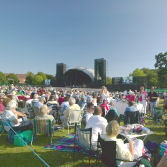 or bands play while people eat their picnic, chat and dance, hopefully on a blissful summer evening, often under umbrellas in a downpour. There is usually an entrance charge either for a contribution to a charity or for a private promotion.
Perhaps there is an exception in the summer picnic event where very often people do come to hear a particular band, but otherwise what these events have in common is that the audience has not come to listen to the music – they are there for some other reason or cause. As a result, only a small proportion of the audience may be listening to the music that is being played - if they can hear it over the general clatter of conversation, knives and forks, or drunken laughter. The irony is that for some of these gigs, weddings for example, the band may be paid better than for other gigs.
Nevertheless, there may be a longer term payoff in that people may dance to and enjoy music they have not really heard before, register in their memory the name of a band that they may choose to go and hear again, or buy a CD that they might play later as a reminder of an enjoyable occasion…. here comes a new member of tomorrow’s audience.
Riley and Laing reported some important findings in 2006. They looked at figures from surveys of the company TGI on behalf of Arts Council England that concluded that around 6% of adults questioned had attended a jazz performance in the past 12 months – an increase from 5% in 2001. The figures for the jazz audience was higher than that for opera (4%), but smaller than that for classical music (8%).
A study in Wales showed slightly audience different figures:
Any Music Event 23%
Classical 13%
Folk and World Music 11%
Jazz 10%
Opera 7%
Riley and Laing concluded that there was a similar ‘core’ audience to that in England but also noted the demographic findings of the Welsh study (i.e. different regions of the country may reflect different interests).
The Welsh study found that 57% of the audience were males, and that there was a strong socio-economic bias of social groups ABC1. In relation to the general population 15% were under 24 years of age and 20% were over 65 years of age.
So, do you recognise this picture and where do you fit in?
© Sandy Brown Jazz 2008 - 2014
‘The Value of Jazz in Britain’, 2006, Mykaill Riley and Dave Laing, University of Westminster available to download from Jazz Services Ltd.